

SCHOLARSHIP APPLICATION: (Deadline: APRIL 30th, 2026)
Please ensure all fields are filled in completely.To view previous winner: Click Here
(IF YOU HAVE ANY QUESTIONS, PLEASE EMAIL THE PROGRAM ADMINISTRATOR AT RYAN@STUDENTSCHOLARSHIPS.ORG)
Container Handler Part
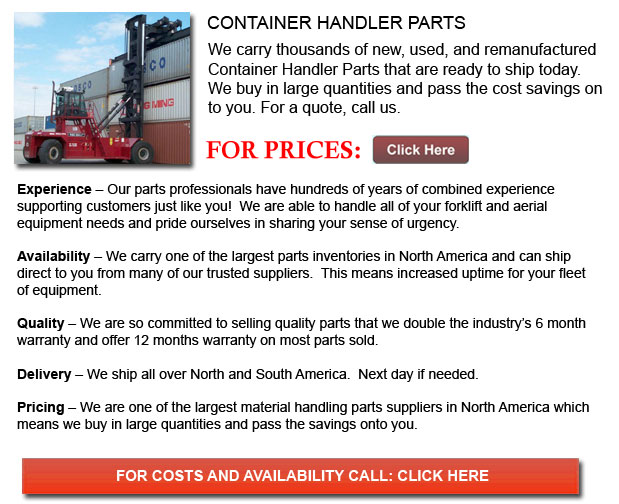

Container Handler Part - Forming the basis of containerization, shipping containers are part of a transfer system based on utilizing steel intermodal containers (shipping containers). These containers are made to particular standard dimensions that can be transported and stacked, unloaded and loaded with optimum efficiency over long distances. Shipping containers are usually transported by ships, rail and semi-trailer trucks without being opened.
This system of making use of shipping containers was developed after World War II to be able to greatly decrease transport costs. Containerization has likewise been huge in increasing international trade alliances. Today, for instance, about 90% of non-bulk cargo is transported worldwide by containers which are stacked on transport ships. It is estimated that 26 percent of all container trans-shipment occurs in China. There are enormous ships that can carry more than fourteen thousand five hundred units.
Few individuals initially can see the effect that container shipping will have in the shipping trade. One economist in the 1950s, namely Benjamin Chinitz of Harvard University, predicted that containerization will have significantly benefit New York, by enabling it to ship more effectively to the southern parts of the US. He did not anticipate that containerization would even make it more inexpensive to import such items from abroad.
Of the economic studies on containerization, nearly all assumed that the shipping organizations will soon begin to replace older forms of transportation with the container systems. The studies did not predict that the process of containerization itself will result in a more direct effect on the variety of producers, along with increasing the overall volume of trade across the world.
Containerization offers one crucial benefit which is improved cargo security. The cargo is less likely to be stolen as all the merchandise is not visible to the casual viewer. Normally, the doors of the containers are sealed and this means that whichever signs of tampering are more evident. There are several containers which are equipped with high-tech electronic monitoring devices. These could be distantly monitored to detect changes in air pressure. This detection takes place when the doors are opened. These monitoring devices have lessened the "falling off the truck" syndrome that long plagued the shipping industry.
There used to be some difficulty with incompatible rail gauge sizes in different countries. Use of the same basic sizes of containers worldwide has lessened the issues that used to often happen. These days, nearly all rail networks all around the globe operate on a 1435 mm gauge track. This is considered to be the standard gauge, even if, a lot of countries make use of wider gauges. Several nations in South America and Africa use narrower gauges on their networks. All of these nations depend on container trains which makes trans-shipment between various gauge trains a lot easier.
 Click to Download the pdf
Forklift Parts

Lift Parts Express
TOLL FREE: 1-888-695-7994
forkliftpartsutah.com
Email Us
About Us